 admin
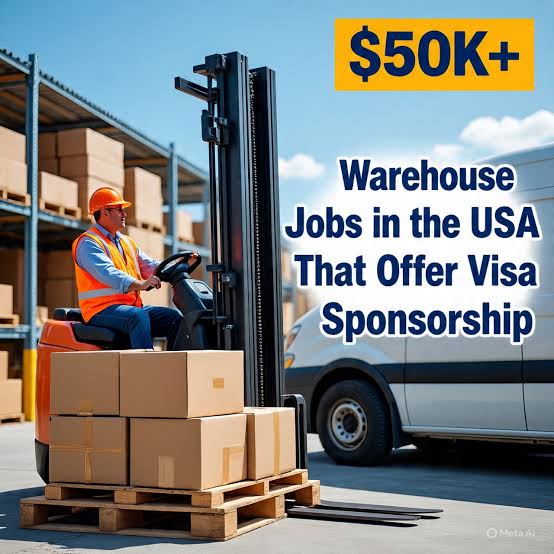
adminFor international job seekers, the possibility of earning around $50,000 per year in the United States while receiving employer-sponsored visa support can be an attractive career and immigration opportunity.
However, finding such a position requires more than simply searching for jobs that advertise a $50,000 salary.
The U.S. employment immigration system includes several visa categories, and eligibility depends on factors such as the occupation, qualifications, employer, wage requirements, and the applicant’s circumstances. Employment-based immigrant visas, for example, include categories such as EB-1, EB-2 and EB-3, while temporary employment can involve categories such as H-1B.
This guide explains what prospective applicants should know when preparing for $50,000-or-more visa-sponsored employment opportunities in the United States in 2027.
What Does a $50,000 Visa-Sponsored Job Mean?
A $50,000 visa-sponsored job is best understood as a U.S. employment opportunity offering approximately $50,000 in annual compensation where the employer is prepared to undertake the immigration sponsorship process required for the particular worker and position.
The salary itself does not create visa eligibility.
For example, an employer might advertise a position paying $50,000 per year, but that does not automatically mean the employer will sponsor a foreign applicant. Conversely, a sponsored position could pay considerably more than $50,000.
For certain employment visa programs, the employer must comply with wage rules. Under the H-1B program, for instance, an employer generally must pay the H-1B worker at least the higher of the actual wage paid to similarly qualified workers or the applicable prevailing wage for the occupation and location.
Therefore, applicants should never assume that a fixed salary figure guarantees sponsorship.
Why Are $50,000 Jobs Attractive to International Applicants?
A $50,000 annual salary can represent a meaningful starting point for an international worker, particularly in occupations where employers have difficulty finding qualified candidates locally.
The actual value of a $50,000 salary, however, depends heavily on location. Housing, transportation, health insurance, taxes, childcare and other expenses vary significantly across the United States.
A worker earning $50,000 in a lower-cost area may have a very different financial situation from someone earning the same amount in a high-cost metropolitan area.
Applicants should therefore evaluate the entire employment package, rather than focusing only on the advertised annual salary.
Important factors include:
-
Base salary
-
Overtime eligibility
-
Health insurance
-
Retirement benefits
-
Paid vacation and sick leave
-
Relocation assistance
-
Housing or temporary accommodation
-
Professional development
-
Location and cost of living
-
Opportunities for career advancement
-
Immigration sponsorship and legal support
Which U.S. Visa Routes Can Be Relevant?
There is no universal visa for every $50,000 job. The appropriate immigration route depends on the nature of the employment and the applicant’s qualifications.
H-1B Specialty Occupation
The H-1B program is one of the best-known U.S. temporary employment routes for foreign professionals. It is generally associated with specialty occupations requiring specialized knowledge and appropriate educational or equivalent qualifications.
For H-1B employment, the employer has important responsibilities before and during the immigration process. The Department of Labor requires an employer to submit a Labor Condition Application, and the employer must attest to wage and working-condition requirements.
A $50,000 salary therefore cannot be viewed in isolation. Whether that amount is legally sufficient for a particular H-1B position depends on the occupation, work location, wage requirements and other applicable rules.
Applicants should also remember that immigration regulations and government policies can change. Anyone planning for 2027 should verify the rules in effect when an employer actually begins the sponsorship process.
EB-2 Employment-Based Immigration
EB-2 is an employment-based immigrant category for certain professionals holding advanced degrees and certain individuals with exceptional ability.
Generally, an employer-sponsored EB-2 case involves a qualifying job offer and an employer-filed Form I-140, with labor certification normally required. A National Interest Waiver can provide an alternative in qualifying circumstances and may allow the applicant to self-petition.
The salary alone does not determine EB-2 eligibility.
EB-3 Employment-Based Immigration
EB-3 is particularly relevant to applicants exploring employer-sponsored permanent employment because it covers skilled workers, professionals and certain other workers.
The U.S. Department of State explains that EB-3 skilled workers generally have jobs requiring at least two years of training or work experience, while EB-3 professionals generally have jobs requiring at least a bachelor’s degree or foreign equivalent. Other workers can qualify for certain jobs requiring less than two years of training or experience, provided the applicable requirements are met.
For most EB-3 cases, the prospective employer must file the immigrant petition, and labor certification is generally required.
Types of Jobs That May Offer Sponsorship
Not every job paying $50,000 will qualify for sponsorship, but international applicants may find opportunities in industries where employers regularly recruit specialized or skilled workers.
Potential areas to research include:
Information Technology
Technology-related positions can include software development, systems administration, cybersecurity, data-related roles and technical support. Higher-level technology positions may command salaries substantially above $50,000, although requirements vary by employer and location.
Engineering
Engineering employers may recruit candidates in fields such as civil, mechanical, electrical, industrial and manufacturing engineering. Professional qualifications, technical experience and licensing requirements can affect eligibility.
Healthcare
Healthcare is another major employment sector in the United States. However, foreign-trained healthcare professionals may face licensing, credential evaluation and state-specific requirements in addition to immigration requirements.
Education
Some educational institutions and specialized employers recruit international professionals. Eligibility depends on the position, qualifications, institution and visa category involved.
Skilled Trades and Technical Occupations
Certain technical and skilled occupations may provide employment opportunities for foreign workers through appropriate immigration pathways. Applicants should distinguish between an employer simply hiring foreign talent and an employer that is actually willing and legally able to sponsor a particular visa.
How to Find Visa-Sponsored Jobs in 2027
The most effective strategy is to search for both the occupation and the sponsorship requirement.
Instead of searching only for:
“$50,000 jobs in USA”
try searches such as:
“visa sponsorship jobs USA”
“H-1B sponsorship jobs”
“EB-3 sponsorship jobs”
“employment sponsorship software engineer USA”
“visa sponsorship jobs $50,000 salary”
You should then examine each vacancy carefully.
Look for terms such as:
-
“Visa sponsorship available”
-
“Employer sponsorship”
-
“H-1B sponsorship”
-
“Employment sponsorship”
-
“Sponsorship considered for qualified candidates”
-
“Green card sponsorship”
-
“Foreign candidates welcome”
Be cautious, however. A phrase such as “visa sponsorship may be available” is not the same as a guaranteed sponsorship commitment.
How to Prepare Before Applying
Preparation can significantly improve the quality of your applications.
1. Build a U.S.-style résumé
Create a concise résumé focused on measurable achievements, relevant skills and professional experience.
For example, instead of simply writing:
Managed company databases.
You could write:
Managed and optimized databases supporting more than 50,000 customer records while improving data retrieval performance.
Specific accomplishments make your experience easier for recruiters to understand.
2. Match Your Qualifications to the Position
Do not apply for every vacancy that mentions sponsorship.
Read the job description carefully and compare its requirements with your education, professional experience, certifications and technical skills.
3. Research the Employer
Before accepting an offer, investigate the company.
Check whether it is an established business, whether it has previously sponsored foreign workers where relevant, and whether the position appears genuine.
The Department of Labor provides information concerning H-1B labor-condition requirements and wage compliance, which can help applicants understand the employer’s obligations.
4. Verify the Salary
A $50,000 offer should not automatically be treated as adequate for an immigration case.
For H-1B employment, the employer must comply with applicable wage requirements, including the requirement to pay the higher of the applicable actual or prevailing wage under the program.
Applicants should therefore evaluate the occupation, worksite and applicable wage information before assuming an offer is immigration-ready.
Understanding the Sponsorship Process
The immigration process varies according to the visa category.
For an H-1B case, an employer generally needs to complete the required Department of Labor process before submitting the petition to U.S. Citizenship and Immigration Services. The Department of Labor describes the Labor Condition Application as an important part of the H-1B process.
For many employment-based immigrant cases, the process can involve labor certification followed by an employer-filed Form I-140. The Department of State explains that approximately 140,000 employment-based immigrant visas are made available each fiscal year across the employment-based preference categories, subject to the applicable statutory rules and limitations.
After petition approval, applicants may still need to complete additional immigration processing. Depending on the circumstances, this can involve consular processing or adjustment of status.
Consequently, receiving a job offer is not necessarily the final step toward obtaining immigration status.
Be Careful With “Guaranteed Visa” Job Advertisementsn
International job seekers are frequently targeted by fraudulent recruitment schemes.
Be particularly cautious if someone claims that you can obtain a U.S. work visa simply by paying a large recruitment or sponsorship fee.
A legitimate employment opportunity should provide clear information about:
-
The employer’s legal identity
-
Job title
-
Work location
-
Salary
-
Job responsibilities
-
Employment conditions
-
Sponsorship arrangements
-
Required qualifications
-
The applicable immigration pathway
Under H-1B rules, the Department of Labor states that employers generally cannot require H-1B workers to pay certain employer business expenses or petition filing fees, and workers have specific protections concerning wages and working conditions.
Never send money simply because a recruiter claims that payment will “guarantee” a U.S. visa.
What About the 2027 Visa Landscape?
Managed company databases.
Anyone planning to work in the United States in 2027 should understand that immigration rules can change between the time a job is advertised and the time a petition is filed.
The State Department’s visa bulletin demonstrates that employment-based immigrant visa availability can vary by category, country of chargeability and fiscal year. For example, the October 2026 Visa Bulletin lists different dates for EB-2 and EB-3 applicants from different countries.
This means applicants should not rely on an old article, social-media post or recruitment advertisement as their only source of immigration information.
Before making an important decision, check current information from USCIS, the U.S. Department of Labor and the U.S. Department of State, or consult a qualified U.S. immigration attorney.
A Practical 2027 Application Strategy
If your goal is to obtain a U.S. job paying approximately $50,000 or more with possible sponsorship, consider the following approach:
Step 1: Identify your occupation.
Determine the U.S. job title that best matches your qualifications.
Step 2: Research realistic salaries.
Compare salaries by occupation and geographic location instead of assuming every position pays the same amount.
Step 3: Identify suitable visa categories.
Determine whether your circumstances potentially fit a temporary employment route, employment-based immigrant category or another applicable pathway.
Step 4: Target employers carefully.
Focus on companies and institutions whose hiring needs match your qualifications and that have a legitimate ability to employ foreign workers.
Step 5: Prepare a professional résumé.
Highlight achievements, qualifications, certifications and experience relevant to the position.
Step 6: Apply consistently.
Employer sponsorship can be competitive, so submitting one application and waiting may not be enough.
Step 7: Verify every offer.
Confirm the employer, salary, job location, sponsorship arrangement and employment terms before sharing sensitive documents or paying any money.
Step 8: Verify immigration requirements.
Immigration rules can change, so check the applicable government guidance when the employer is ready to begin the process.
Conclusion:
The idea of $50,000 USA visa-sponsored jobs in 2027 can be useful as a job-search concept, but it should not be misunderstood as a specific government visa program.
The central issue is not simply whether a job pays $50,000. The important questions are whether the position is genuine, whether the employer is willing and legally able to sponsor the worker, whether the applicant meets the requirements of the relevant immigration category, and whether the proposed employment satisfies applicable wage and immigration rules.
For some applicants, employment-based routes such as H-1B, EB-2 or EB-3 may be relevant, depending on their occupation and qualifications. Employment-based immigrant categories have annual numerical limits and can be subject to country-specific visa availability, so planning ahead is important.
The best preparation for a 2027 opportunity is therefore to build strong professional qualifications, target legitimate employers, understand the sponsorship process and verify current government requirements before making financial or immigration decisions.

 admin
admin